

The 1% Rule Didn't Save Dr. Rental
Three rental properties. Two met the 2% rule. He still lost money.

When I started my real estate investing journey in 2016, I discovered BiggerPockets.
Like many new investors, I quickly learned what sounded like the golden rule of rental investing:
Buy a long-term rental that meets the 1% rule, and it will cash flow.
That became gospel to me.
Fast forward nearly a decade.
Today, I review physicians’ tax returns for a living.
After looking at hundreds of Schedule Es, I realized something.
The 1% rule isn’t the whole story.
Yes, there are properties that meet the 1% rule and produce excellent cash flow.
But there are also plenty that don’t.
This article isn’t meant to discourage you from investing in rental properties.
Quite the opposite.
I simply want to play devil’s advocate so you understand both sides before jumping in.
So today, let me introduce you to Dr. Rental.
He’s not a real person.
But these numbers are.
Meet Dr. Rental
Dr. Rental owns three long-term rental properties.
Every one of them satisfies the famous 1% rule (of thumb).
In fact, two are even better.
They’re 2% rule properties.
If someone offered you these deals today, most real estate investors would jump on them, STAT!
Yet here's what actually happened.
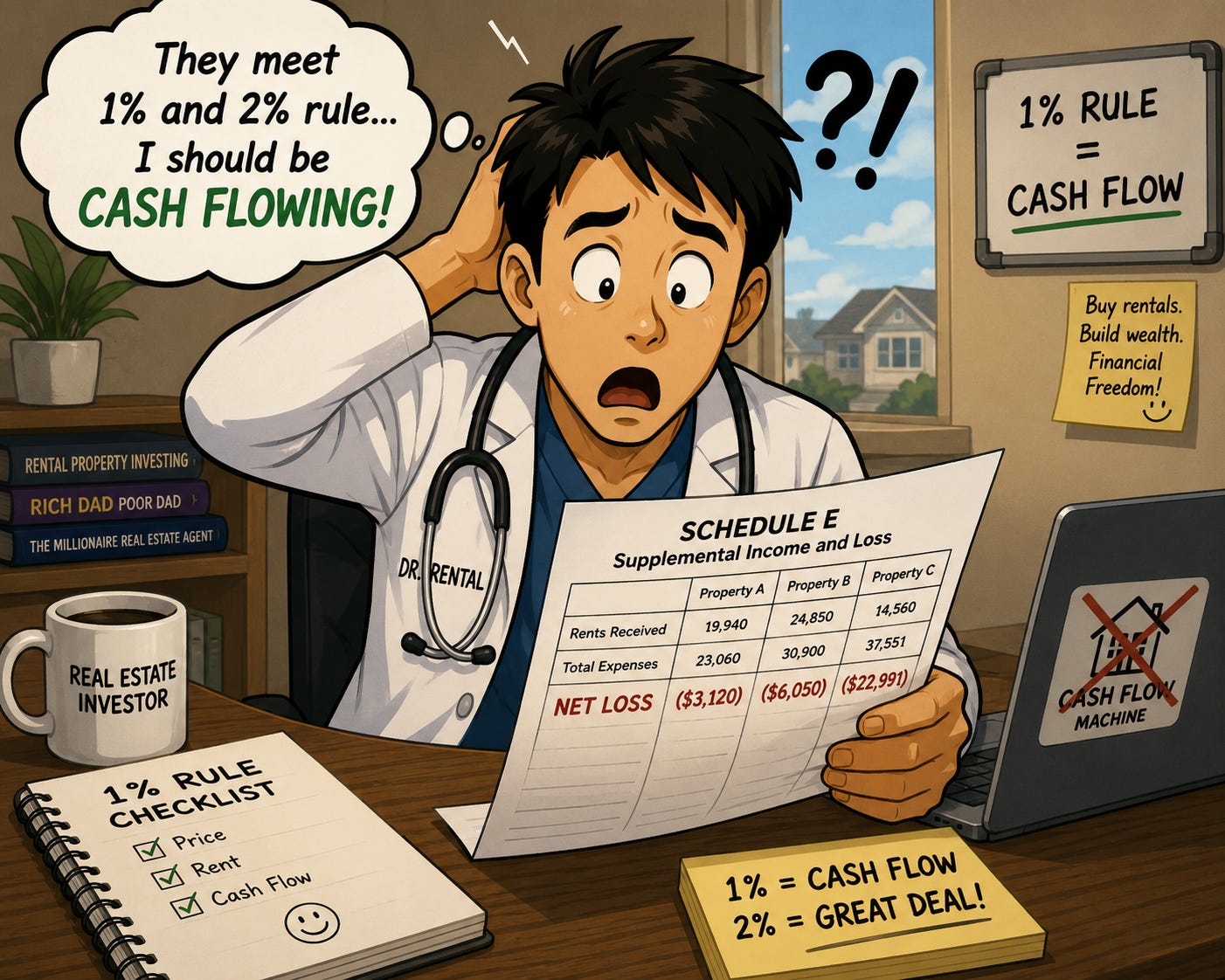
Property A
Approximate depreciable basis (purchase price + improvements): ~$100,000
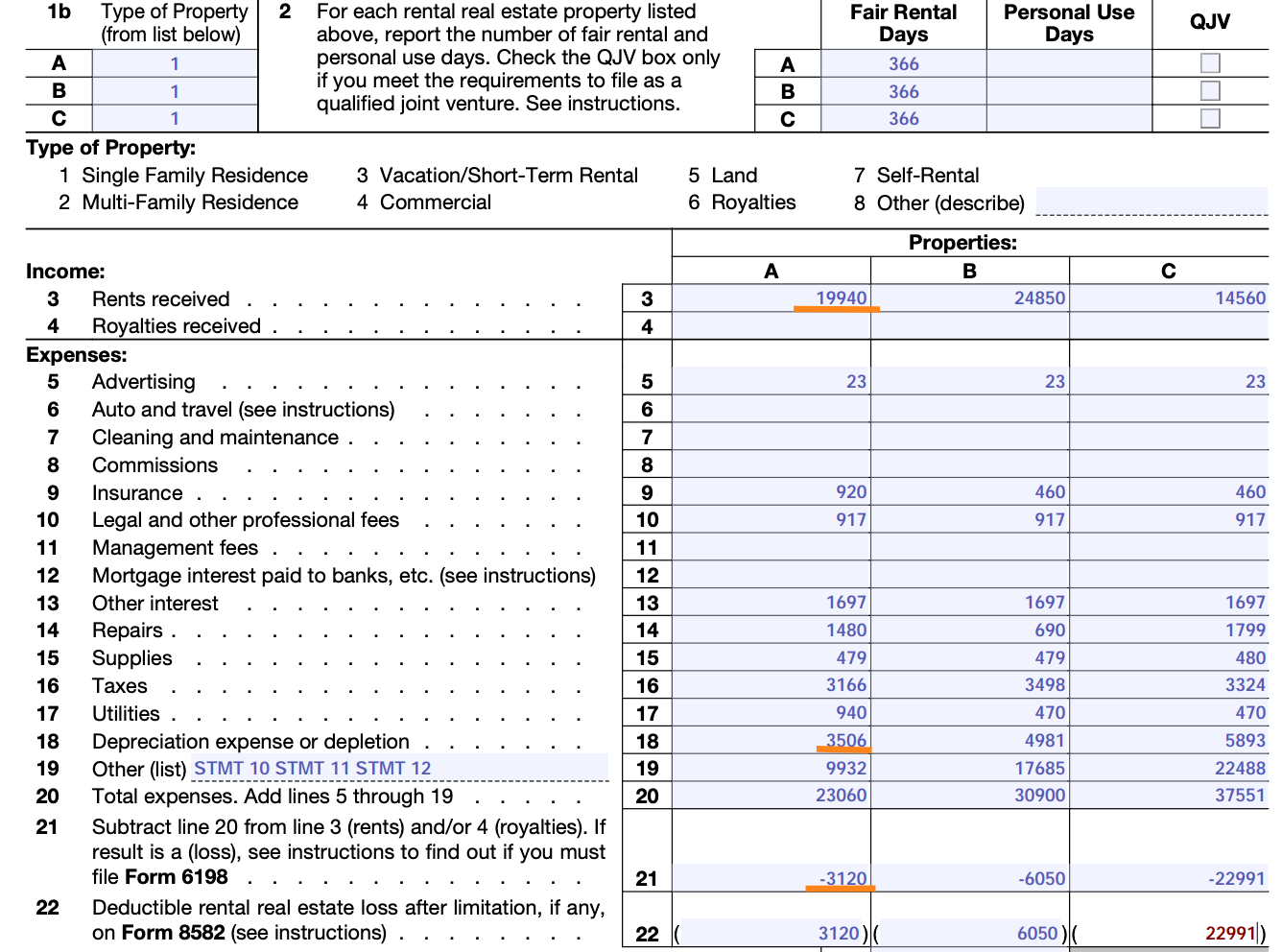
Annual rent: $19,940
That’s essentially a 2% rule property.
Sounds incredible.
Now let’s look at reality.
Tax loss: ($3,120)
“But depreciation isn’t cash.”
Correct.
Let’s add depreciation back.
Estimated Cash flow?
Roughly $400 for the entire year.
A 2% rule property...
that barely broke even.
Property B
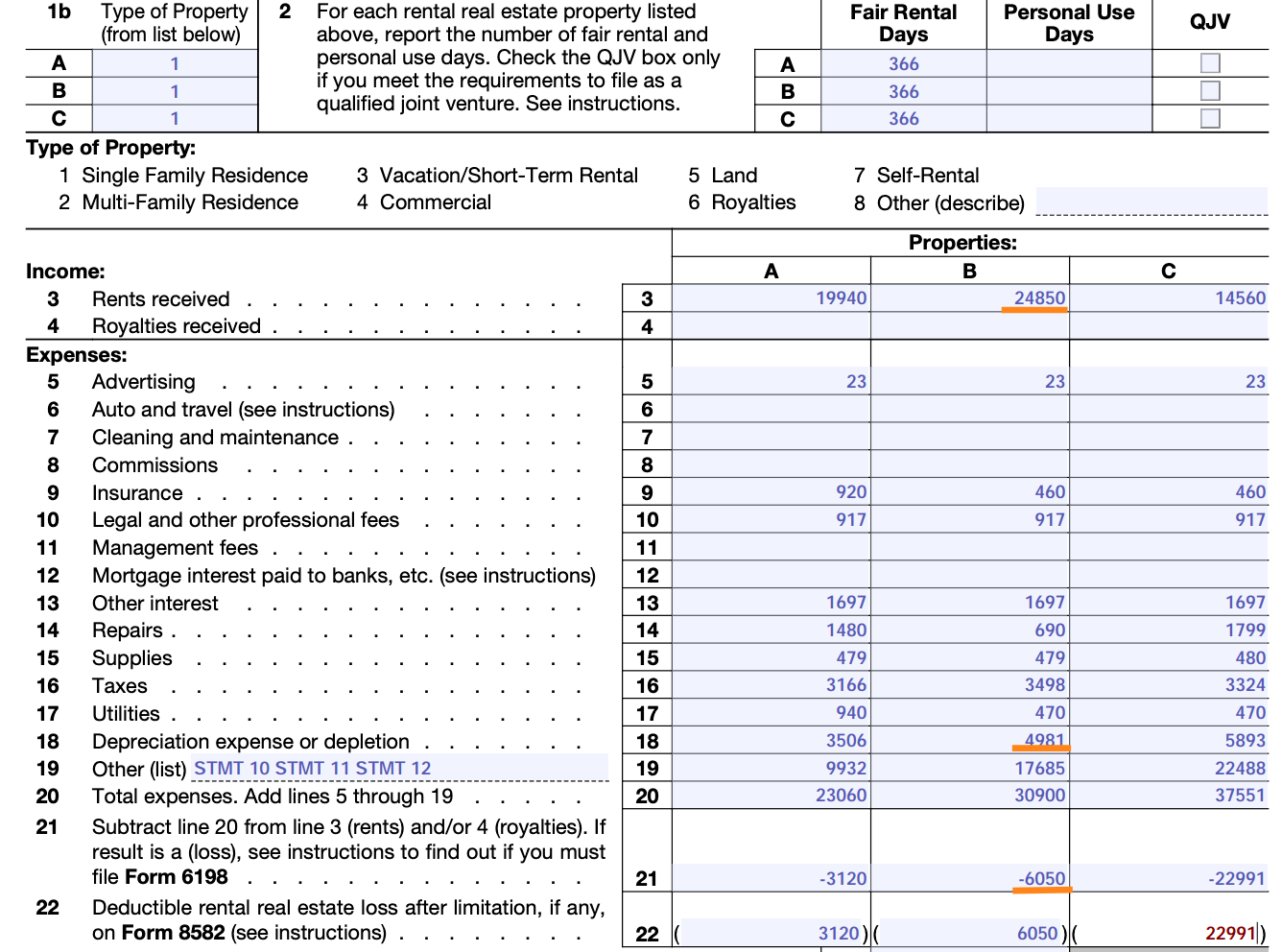
Approximate depreciable basis: ~$136,000
Annual rent: $24,850
Again...
nearly a 2% rule property.
Tax return:
Tax loss: ($6,050)
After adding back depreciation...
the property still lost roughly $1,000 in cash.
Even a 2% property can lose money.
Property C
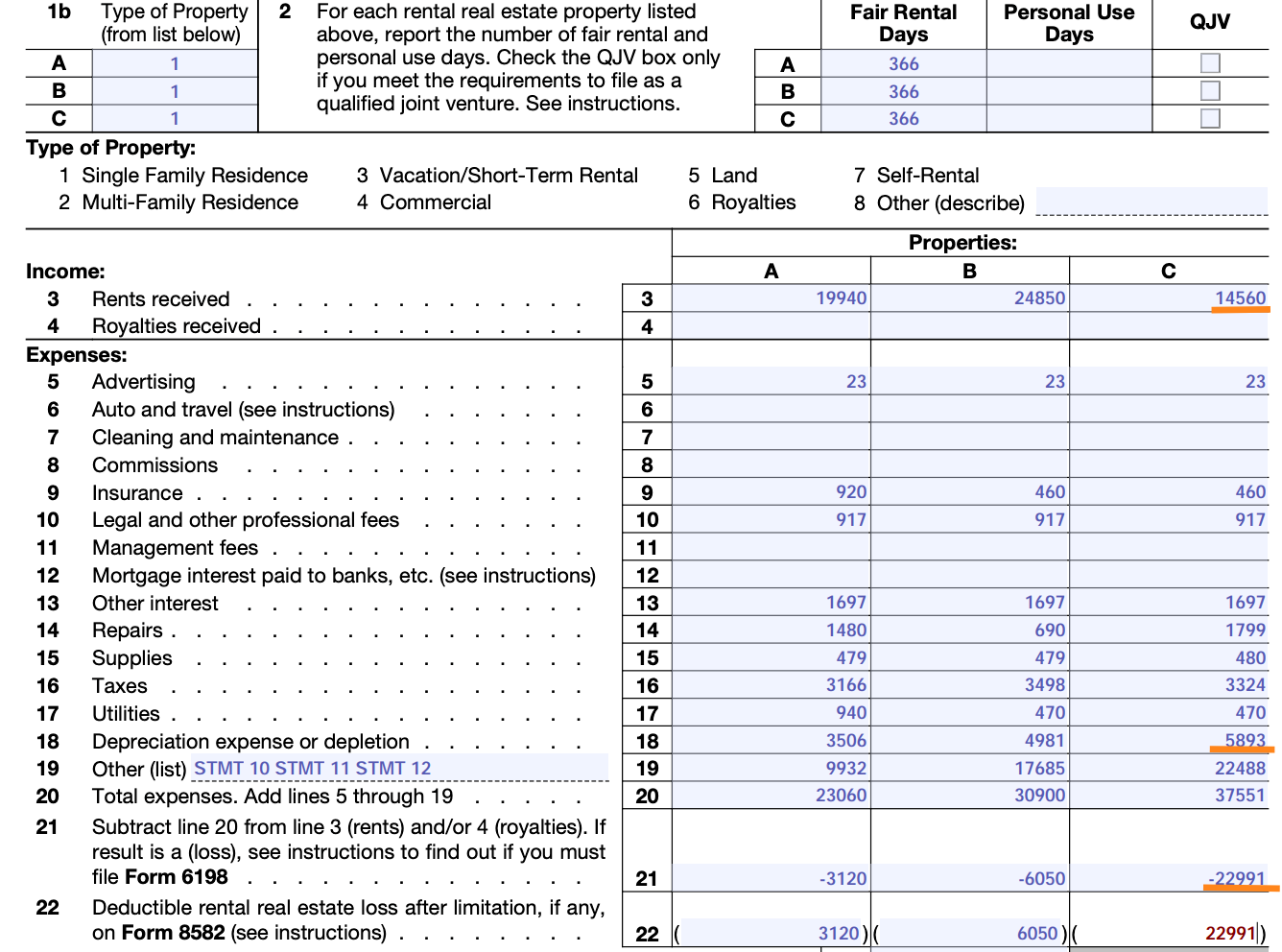
Approximate depreciable basis: ~$162,000
Annual rent: $14,560
Closer to the classic 1% rule.
Tax return:
Tax loss: ($22,991)
Even after adding depreciation back...
the property still lost roughly $17,000.
Ouch.
So... What Happened?
The 1% rule looks at exactly one thing:
Purchase price versus rent.
That’s it.
It doesn’t account for the things that actually drain your bank account.
Like:
A broken HVAC
Roof replacement
Plumbing leaks
Foundation issues
Broken windows
Vacancies
Unexpected repairs
I’ve personally had a repair bill that cost more than an entire year’s rental income.
One unexpected expense can erase years of positive cash flow.
That’s the reality of owning rental property.
And the hard part?
You don’t know which expense is coming next and when.
Even maintaining a healthy capital expenditure reserve isn’t always enough.
That’s why I wouldn’t buy a property based solely on the 1% rule.
Does This Mean the 1% Rule Is Useless?
Not at all.
I still think it’s an excellent screening tool.
It can help filter out obviously overpriced properties.
What it doesn’t do...
is predict profitability.
That’s a much more complicated calculation.
What the Real Estate Gurus Don’t Always Tell You
I’ll admit it.
I bought into the dream too.
“Buy 100 rentals.”
“Replace my physician income.”
“Achieve financial freedom.”
Can it happen?
Absolutely.
Is it easy?
Not even close.
When I review actual physician tax returns instead of YouTube thumbnails...
the story is usually much more nuanced.
Many long-term rentals lose money, or barely break even, for years.
And that’s okay.
Many investors are intentionally trading current cash flow for:
Appreciation
Principal paydown
Tax benefits
Long-term wealth
Those are all perfectly valid reasons to invest.
Just don’t expect every rental to become an ATM from day one.
The Bottom Line
One lesson I’ve learned after reviewing hundreds of physician tax returns:
The 1% rule tells you very little about profitability.
Actual cash flow depends on what happens after the first rent check arrives.
Just like medicine...
Rules of thumb are useful.
Reality is usually more nuanced.
📅 Are you a physician thinking about investing in real estate?
Don’t rely solely on rules of thumb.
Before buying your next rental property, make sure you’re analyzing the actual numbers, not just the 1% rule.
Book a free discovery call: